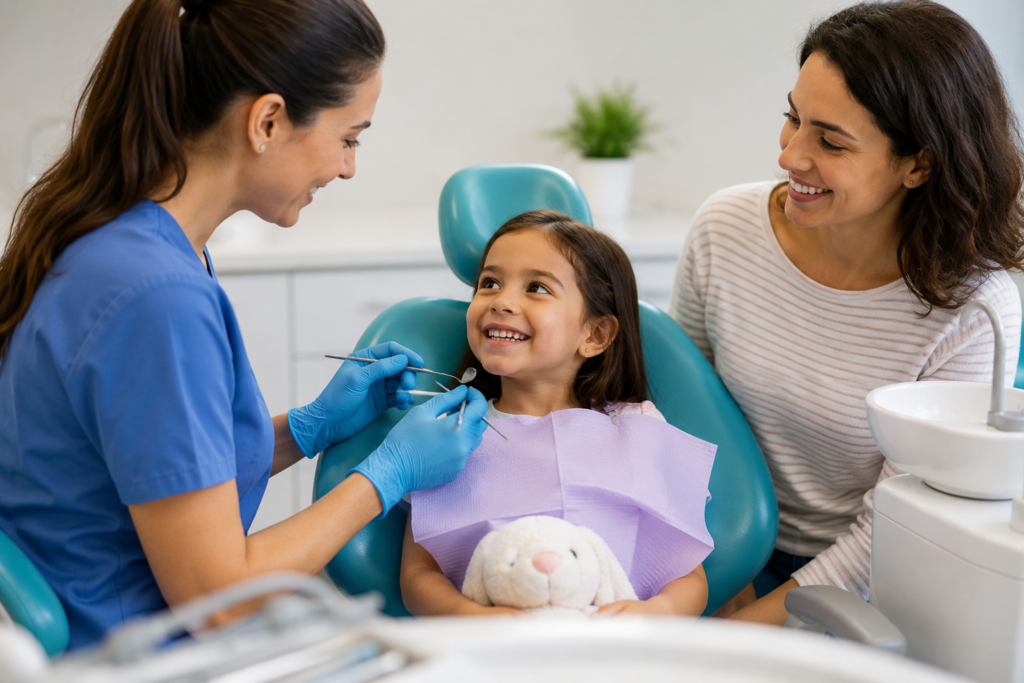
You might be thinking, “Is my child really old enough to see a dentist?” If your child only has a few teeth, it is easy to assume a dental visit can wait until they are older. However, the first dental appointment is about much more than checking for cavities. It gives you practical tools to care for your child’s developing smile and helps your little one get comfortable with the dentist’s office from an early age.
Understanding when to book, what happens during the appointment, and how to keep your child calm can make the entire experience smooth and stress-free.
When Should a Child First Visit the Dentist?
The American Dental Association recommends that children visit a dentist within six months after their first tooth appears, and no later than their first birthday.
While this might seem early, baby teeth are susceptible to decay as soon as they break through the gums. An early visit allows the dentist to inspect your child’s mouth, assess gum health, and guide you on essential topics like brushing techniques, fluoride intake, and feeding habits.
- For infants: The visit is usually brief and cozy. The dentist will gently examine your child’s mouth while they sit comfortably on your lap.
- For older toddlers: They may be encouraged to sit in the big dental chair by themselves to build confidence.
The primary goal of this first visit is acclimatization—helping your child feel safe rather than performing extensive procedures.
What Happens During the First Appointment?
Every child’s visit is tailored to their age and comfort level, but a typical first appointment includes:
- A gentle examination: The dentist inspects the teeth, gums, jaw, and oral tissues to monitor development.
- A routine check-in: They will ask about your child’s current brushing habits, diet, thumb-sucking, or pacifier use.
- A slow introduction: If your child feels anxious, the team will take time to show them the tools, light, and surroundings before starting.
This visit is also your opportunity to ask questions. Consider bringing up topics like:
- What type of toothpaste and fluoride amount is safe for my child’s age?
- How often should we brush, and am I using the right technique?
- Which foods or drinks should we limit to prevent decay?
- How frequent should follow-up check-ups be?
Why Baby Teeth Matter More Than You Think
It is common to hear, “They are just baby teeth; they’ll fall out anyway.” However, primary teeth play a vital role in your child’s overall development:
- Forming speech: Clear pronunciation depends heavily on tooth placement.
- Enabling nutrition: Healthy teeth allow children to chew solid foods comfortably.
- Holding space: Baby teeth act as guides for permanent teeth. Losing a baby tooth too early due to decay can cause adult teeth to come in crooked or crowded.
- Preventing pain: Untreated tooth decay in primary teeth causes severe pain, which can disrupt a child’s sleep, eating, and learning.
How to Prepare Your Child for the Visit
A little preparation at home goes a long way toward preventing tantrums or anxiety on the day of the appointment.
- Keep descriptions positive: Frame the visit as a fun new experience. Tell them, “We are going to meet a friendly doctor who counts your teeth!”
- Avoid scary language: Refrain from using words like “shot,” “hurt,” or “pain,” and try not to share any of your own past dental fears. Children easily pick up on parental anxiety.
- Read books or play pretend: Read picture books about visiting the dentist, or play a game at home where your child practices opening wide while you count their teeth with a toothbrush.
- Set realistic expectations: It is completely normal if your child cries or resists opening their mouth. Pediatric dental teams are trained to handle these reactions with patience and care.
What Parents Should Tell the Dentist
Before you go, make a quick note of any observations or concerns regarding your child’s mouth. Be sure to inform the dentist if you have noticed:
- Sensitivity to cold or sweet foods
- Bleeding or swollen gums
- White, brown, or dark spots on the teeth
- Signs of mouth pain or difficulty chewing
- Frequent teeth grinding, thumb-sucking, or prolonged pacifier use
- A diet that includes frequent sugary snacks or juice boxes
Even if a detail seems minor, sharing it helps the dentist tailor their care and advice to your child’s specific needs.
How to Find the Right Pediatric Dentist
Location and convenience matter, but finding a practice designed for children makes a significant difference in their long-term attitude toward dental health. Look for a clinic that features:
- A warm, child-friendly environment with welcoming staff
- Clear, patient communication styles for both parents and kids
- Dental professionals experienced in behavioral guidance for nervous or uncooperative children
If you are looking for specialized pediatric dental care in Coimbatore, clinics like Boss Dental offer experienced pediatric dentists tailored to young patients. Don’t hesitate to call ahead and ask a clinic about their approach to first-time visits before booking.
Are Dental X-Rays Needed?
Parents often worry when X-rays are mentioned for young children. X-rays are not required for every child at every visit.
A dentist will only recommend an X-ray if it is clinically necessary—such as to check for hidden decay between tight teeth, evaluate tooth eruption under the gums, or assess the impact of an injury. If an X-ray is suggested, ask the dentist to explain what they are evaluating so you feel completely informed.
Healthy Habits Start at Home
Professional care is only half the equation; daily habits at home protect your child’s teeth between check-ups:
- Help them brush: Young children lack the manual dexterity to brush thoroughly on their own. Supervise and assist with brushing until around age 7 or 8.
- Use the right brush and paste: Select a soft-bristled, age-appropriate toothbrush and follow pediatric guidelines for fluoride toothpaste amounts (a smear the size of a grain of rice for children under 3; a pea-sized amount for ages 3 to 6).
- Limit sugary drinks: Water should be the primary beverage throughout the day. Limit juice, soda, and sticky snacks that cling to teeth.
Making the First Visit a Lifelong Success
Your child’s first dental visit sets the stage for how they will view dental health for years to come. By starting early, staying positive, and partnering with a supportive pediatric dental team, you help turn routine check-ups into a normal, comfortable part of growing up.