
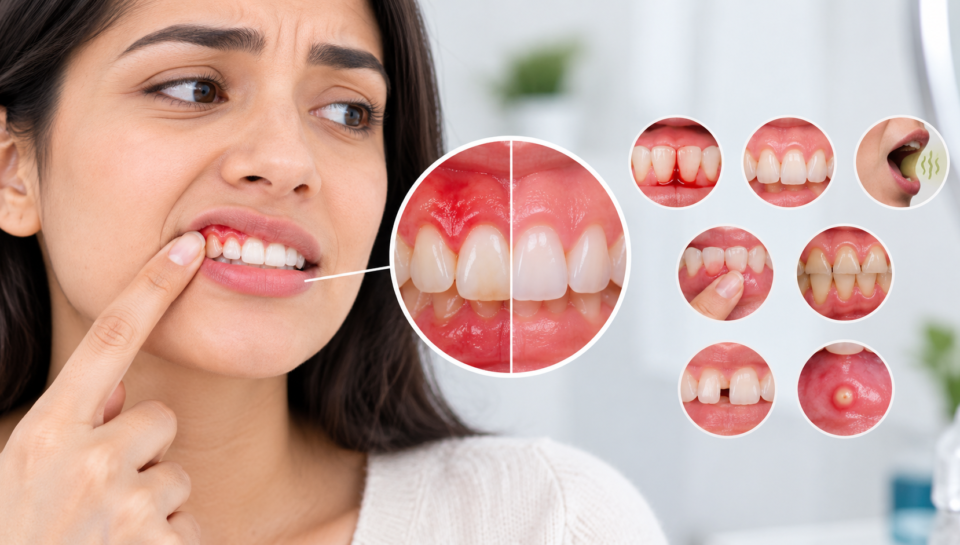
Have you noticed your gums bleeding when you brush? Do you have bad breath that won’t go away? Maybe your gums feel tender or look swollen.
These signs might seem small at first, but they can be early warnings of gum disease. Many people don’t pay attention because gum disease often does not cause pain in the beginning. However, catching it early can make a big difference.
Recognising the signs of gum disease helps you get help before it gets worse. Gum disease affects the tissues that hold your teeth in place. If you do not treat it, it can cause your gums to pull away, make your teeth loose, or even lead to tooth loss. Knowing what to look for and keeping your mouth clean can keep your gums strong and your smile healthy.
What Is Gum Disease?
Gum disease, also known as periodontal disease, is an infection or inflammation of the gums around your teeth. It starts when plaque—a sticky film of bacteria—builds up along the gumline. This plaque can irritate the gums and cause them to become red and sore.
- Gingivitis: This is the first stage. At this point, your gums may be red, swollen, or bleed easily. Good oral care and a professional cleaning by a dentist can usually reverse gingivitis.
- Periodontitis: If ignored, the disease can progress to this more serious stage. Periodontitis can damage the tissue and bone that support your teeth, ultimately leading to tooth loss.
7 Early Signs of Gum Disease You Should Not Ignore
1. Bleeding Gums While Brushing
One of the most common early signs is bleeding when you brush or floss. You might see blood on your toothbrush or on the tissue when you spit.
- Why it happens: Plaque buildup irritates the gums. While brushing too hard can also cause bleeding, frequent or unexplained bleeding should be checked by a professional.
- Action to take: Switch to a soft-bristled toothbrush and see your dentist if the bleeding persists.
2. Red or Swollen Gums
Healthy gums are usually pale pink and firm. If your gums look redder than usual, feel puffy, or appear swollen, this indicates inflammation.
- Why it happens: These changes often occur alongside bleeding or bad breath due to bacterial irritation.
- Action to take: Clean your teeth gently and properly to help reduce plaque. If the swelling stays, schedule a dental visit.
3. Persistent Bad Breath
Bad breath (halitosis) that stays even after brushing, flossing, and cleaning your tongue can be a sign of bacteria living around your teeth and gums.
- Why it happens: Plaque and food particles trapped near the gumline produce foul-smelling compounds.
- Action to take: While bad breath alone does not always mean gum disease, you should talk to your dentist if it continues despite good daily hygiene.
4. Gums That Feel Tender or Uncomfortable
Do your gums feel sore when you brush, floss, or eat certain foods? Tenderness occurs when the gum tissue becomes inflamed.
- Why it happens: Inflammation caused by bacteria makes the delicate gum tissue sensitive to touch and pressure.
- Action to take: Avoid scrubbing hard and clean gently around your gumline. If the discomfort continues, see a dentist.
5. Gums Pulling Away From the Teeth (Recession)
Have your teeth started to look longer than before? This can happen when your gums recede and expose more of the tooth surface.
- Why it happens: Gum recession may happen due to advancing gum disease, aggressive brushing, or other dental issues.
- Action to take: Receding gums can expose vulnerable roots and make your teeth sensitive. Get a check-up if you notice this change.
6. Changes in the Space Between Your Teeth
Have you noticed new gaps between your teeth or a change in how your teeth fit together when you bite down?
- Why it happens: This can occur when the underlying tissues and bone that support your teeth become damaged and compromised.
- Action to take: While not as common in the early stages, it is a serious sign. If your teeth feel loose or your bite changes, see a dentist quickly.
7. Pus or Persistent Gum Swelling
If you see pus near the gumline, a gum boil, or a lump that keeps coming back, this could mean an active infection or abscess.
- Why it happens: Deep infection underneath the gum tissue causes fluid buildup.
- Action to take: These symptoms should never be ignored. Call your dentist right away if you have swelling or pain. If swelling makes it hard to breathe or swallow, seek emergency care immediately.
What Causes Gum Disease?
Knowing the primary causes can help you prevent gum issues before they start. While gum disease is mainly caused by plaque buildup, several other factors can raise your risk:
- Poor Oral Hygiene: Not brushing and flossing regularly lets plaque build up and harden into tartar.
- Smoking or Tobacco Use: Tobacco products make gum disease much more likely and hinder your body’s ability to heal.
- Diabetes: Uncontrolled high blood sugar increases the risk and severity of gum infections.
- Hormonal Changes: Pregnancy, menstruation, or menopause can make gums more sensitive and prone to inflammation.
- Certain Medications: Some drugs cause dry mouth or abnormal gum tissue growth.
- Irregular Dental Visits: Without routine check-ups and professional cleanings, early problems can grow unnoticed.
How Can You Prevent Gum Disease?
Taking care of your gums every day can significantly lower your risk. Here are some simple steps to follow:
- Brush twice a day: Use fluoride toothpaste and brush thoroughly for two minutes.
- Use a soft-bristled brush: Soft bristles effectively clean without damaging delicate gum tissues.
- Clean between your teeth daily: Use dental floss or interdental brushes to remove plaque where toothbrushes can’t reach.
- Avoid tobacco: Stop smoking and avoid all tobacco products.
- Maintain overall health: Eat a balanced diet and manage underlying health conditions like diabetes.
- Schedule regular check-ups: Visit your dentist routinely for professional cleanings and examinations.
If you notice any signs of gum disease, don’t wait. Getting help early can stop the problem before it gets worse.
When Should You Visit a Dentist?
Make an appointment with your dentist if you experience:
- Bleeding gums during brushing or flossing
- Persistent bad breath that won’t go away
- Visible gum swelling or redness
- Noticeable gum recession or loose teeth
During your visit, your dentist will evaluate your gums, check for plaque and tartar buildup under the gumline, and assess how your teeth fit together. Depending on the issue, treatment might include a deep cleaning (scaling and root planing), improved brushing techniques, or specialized periodontal care.
Resources for Further Reading:
- To learn more about comprehensive dental care and gum health, you can visit Dr. Sunil’s Dentistry.
- For detailed clinical information about gum disease symptoms and treatment options, read the NHS guide to gum disease.
Final Thoughts
Recognising the signs of gum disease is a key step in keeping your teeth and gums healthy for a lifetime. Bleeding, redness, swelling, bad breath, and structural changes in your gums can all be early warnings of a problem. While these symptoms can have various causes, ignoring them allows the disease to progress.Brush your teeth twice a day, floss daily, avoid tobacco, and visit your dentist regularly. These simple habits keep your gums strong and your smile bright. If you see signs of trouble, consult a dental professional—early care prevents serious problems and protects your healthy smile for many years to come!